

Campfire Chronicles: Decision Path
Reviews
Campfire Chronicles: Decision Path succeeds as a quiet, introspective game that proves compelling gameplay doesn't require explosions or timers. The forest setting feels appropriately lonely, and the campfire becomes a genuinely comforting anchor point. The resource management is light but meaningful, forcing players to weigh immediate comfort against potential future problems. The writing is clear and avoids melodrama, letting the player's own imagination fill in the atmospheric details. Multiple playthroughs reveal how small early choices ripple into later events, rewarding careful attention. This is an excellent choice for anyone seeking a calm, narrative-driven experience that respects their time and intelligence.
About This Game
Atmospheric Setting & Core Premise
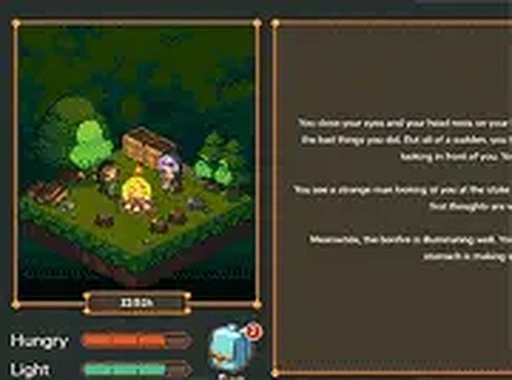
Campfire Chronicles: Decision Path places players in the role of a young woman who becomes disoriented while walking through a dense woodland as evening falls. She stumbles upon a small clearing with a campfire, which becomes the central hub for the night's events. The game's environment is designed to feel isolating yet not overly frightening, focusing on the quiet tension of being alone in nature. The campfire serves as both a literal and metaphorical source of warmth and safety, around which all major interactions occur.
Choice-Driven Narrative Structure
The gameplay revolves around a series of branching scenarios presented to the player. Each scenario offers two to three options, such as whether to eat the berries found nearby, attempt to signal for help, or investigate a rustling sound in the bushes. These choices are not timed, allowing players to consider the potential consequences. The narrative adapts based on the player's selections, leading to different encounters and outcomes. This structure encourages multiple playthroughs to see how alternative decisions lead to different story branches.
Resource Management & Character Well-Being
While the game is primarily story-focused, it incorporates light resource management elements. The player must keep track of the character's hunger, energy, and overall health. Choosing to eat a questionable mushroom might satisfy hunger but could cause illness, while skipping food might leave the character weak for later challenges. The game presents these trade-offs clearly, teaching players that survival often involves balancing short-term needs against long-term safety. This system adds a layer of strategy to the decision-making process.
Accessibility & Platform Support
Campfire Chronicles: Decision Path runs entirely in a web browser, making it accessible on a wide range of devices including desktop computers, laptops, tablets, and smartphones. No software installation or account creation is required to start playing. The interface is optimized for both mouse and touch inputs, with large, clearly labeled buttons for each choice. A full-screen mode is available for players who prefer an immersive experience without browser distractions. The game loads quickly and saves progress automatically using browser storage.
Replay Value & Exploration
The branching narrative design naturally encourages replayability. Players who complete one playthrough will have seen only a fraction of the possible events. Different combinations of choices can lead to meeting different characters, discovering hidden clearings, or finding items that alter the story's direction. The game does not have a traditional leveling system, but the character's accumulated experiences from each playthrough can influence starting conditions in subsequent runs. This design rewards curiosity and experimentation.





Comments
0 comments